




Sustainability
Sustainability forms part of the Sedus Stoll Group’s corporate strategy. Defined objectives, measures and key performance indicators guide the development of its environmental, social and economic responsibilities. The Group takes a long-term approach, linking business activities to measurable objectives and transparent reporting.
A clear goal in mind
Through its ‘People, Planet, Profit’ approach, the Sedus Stoll Group and its three core brands – Sedus, Klöber and S³ Advice – seek to combine economic performance with environmental and social responsibility.
“All decisions must always take the ‘three Ps’ into account. Our aim is to strike a balance between economic, environmental and social considerations.”
Daniel Kittner
Our aim is to take environmental impacts into greater account when selecting materials, measurably reduce emissions from production and logistics, and develop durable, repairable products designed for circular use. We continue to work on resource conservation and social standards throughout our value chain.
Our goals
The Sedus Stoll Group has defined environmental and social goals and a long-term corporate approach. Its science-based framework is intended to support measurable reductions in its environmental impacts.
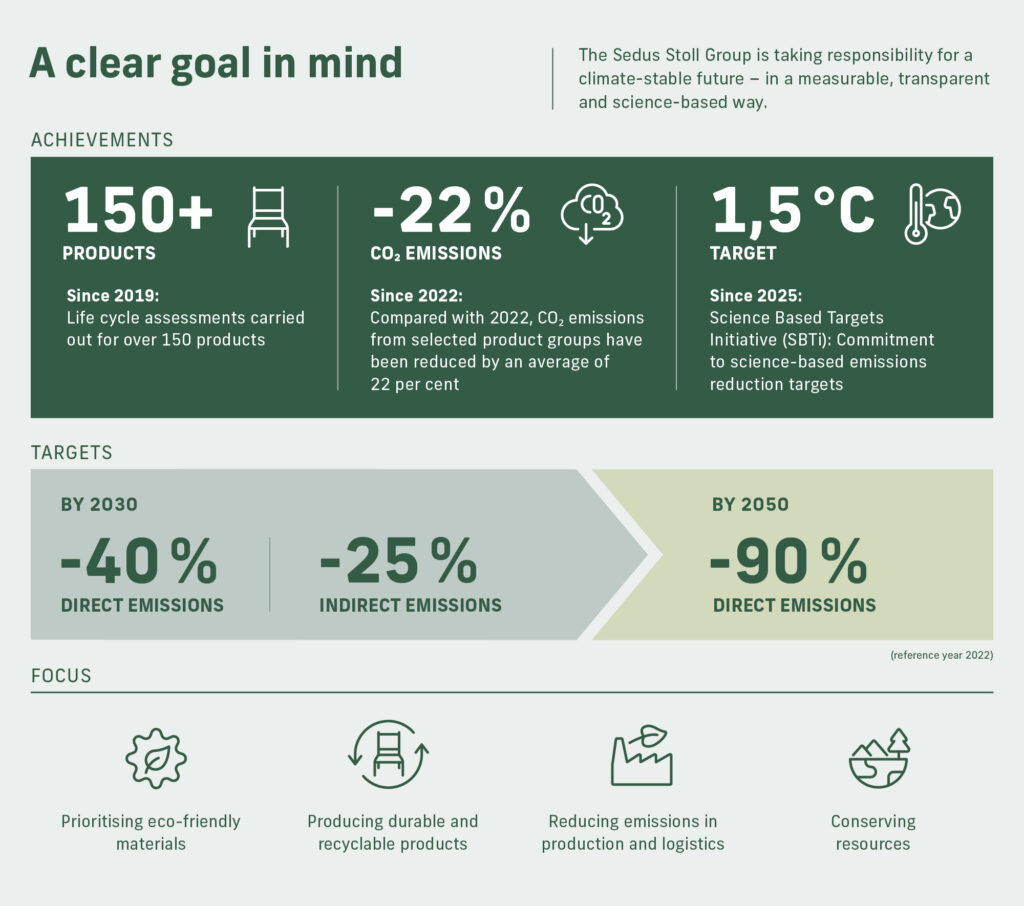
Using 2022 as our base year, we have defined emissions-reduction pathways to guide our transition.
Direct emissions (Scope 1+2):
Our target is to reduce Scope 1 and 2 greenhouse gas emissions by 40% by the end of 2030 and by 90% by 2050, against the 2022 base year. This provides a framework for reducing emissions and improving energy efficiency across our operations.
Indirect emissions (Scope 3):
We aim to reduce Scope 3 emissions across our value chain by at least 25% by 2030 compared with the 2022 base year, working with our partners, suppliers and service providers.
In June 2025, the Sedus Stoll Group made a commitment under the Science Based Targets initiative (SBTi) relating to climate targets aligned with the Paris Agreement’s 1.5°C goal.
Life cycle assessments
Since 2019, the Sedus Stoll Group has conducted in-house product life cycle assessments to identify opportunities to reduce indirect emissions. “Our growing expertise and more comprehensive data allow us to establish CO₂-related targets for new product development and carry out detailed analyses across the product life cycle,” explains Kittner. “Our life cycle assessment methodology provides the basis for our product carbon footprint (PCF) calculations and informs decisions on product development and procurement.”
According to the Group’s analyses, its product carbon footprint in total has fallen by around 22% compared with the 2022 base year. For office swivel chairs, the reported average fell from approximately 104 kg CO₂ per chair in previous years to around 94 kg CO₂ in 2025, a reduction of 9,6%.
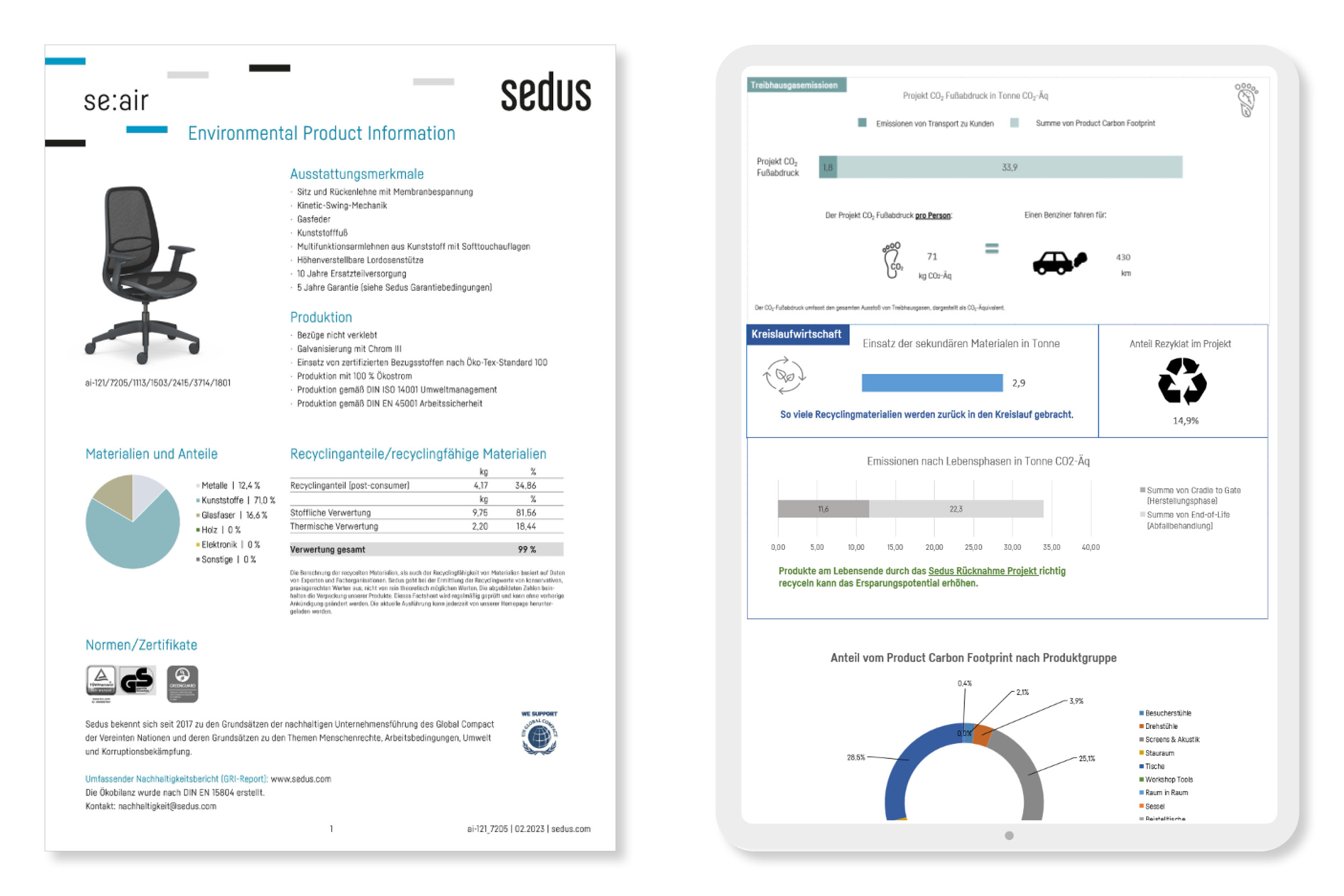
“This reduction is primarily the result of consistently CO₂-focused product development and the redesign of existing core products.”
Daniel Kittner
News and
projects

Klim
The Sedus Stoll Group has worked with Klim since June 2026. Klim connects businesses along the supply chain with agricultural enterprises to support regenerative farming at greater scale.
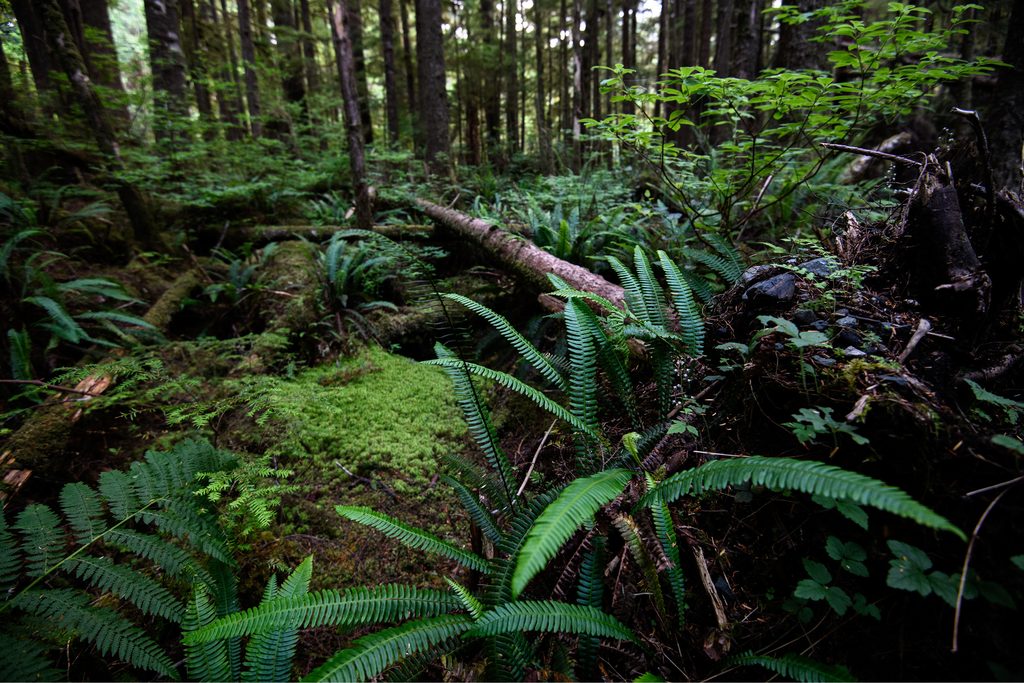
Wilderness International
In January 2026, the Sedus Stoll Group entered into a partnership with Wilderness International. Through defined projects, the Group contributes to the protection of ecologically valuable forest and wilderness areas.
Certificates & Ratings
Certificates and ratings provide transparency about compliance with defined standards and assessments of specific aspects of corporate performance. They offer customers, employees and other stakeholders a basis for informed evaluation.
Sedus Stoll Group

DOWNLOADS